

Crude oil prices climbed on Tuesday, January 13, 2026, as escalating geopolitical tensions between the United States and Iran sparked fresh concerns over potential disruptions to global oil supply. The increase pushed both Brent and WTI benchmarks toward their highest levels in more than a month.
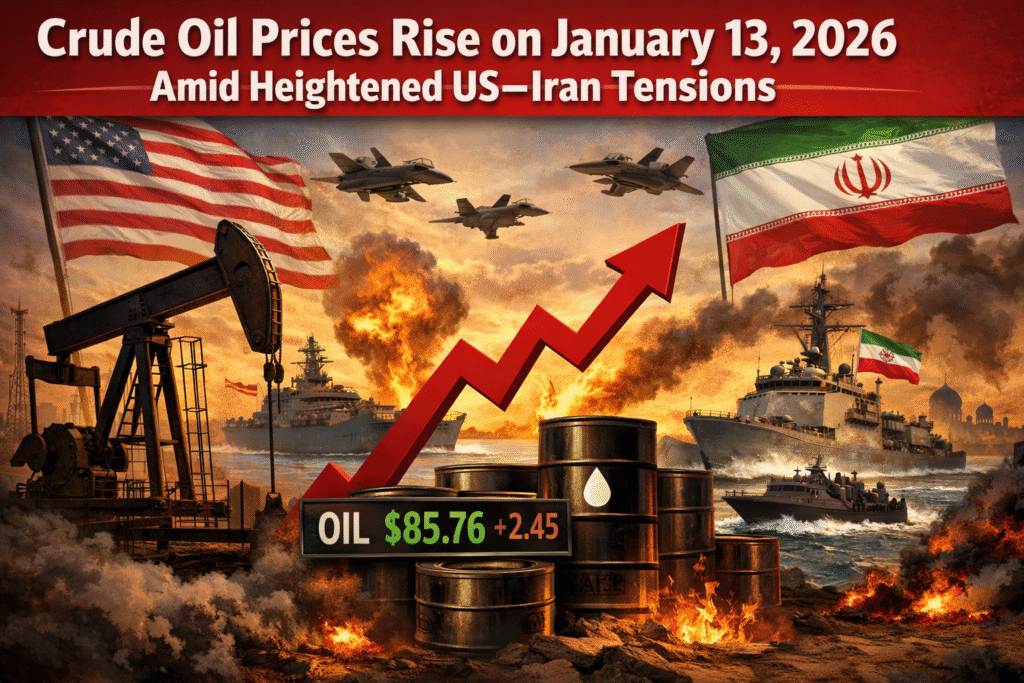

Market Snapshot Crude Oil Prices
- Brent Crude: Around $64+ per barrel, near a two-month high.
- WTI Crude: Close to $60 per barrel, also trending higher.
- MCX Crude Oil (India): Prices in India have risen, reflecting gains in international benchmarks and domestic demand patterns.
Global oil traders reacted strongly to geopolitical developments, building in a “risk premium” that reflects fears of supply disruption if tensions escalate further.
Why Are Oil Prices Rising? Key Drivers
Geopolitical Tensions Between the US and Iran
Heightened conflicts in Iran — including nationwide protests and international pressure — have raised fears that oil exports could be disrupted. US President Donald Trump’s warnings of potential military action and threats of substantial tariffs on nations trading with Iran have added to market nervousness.
Iran remains a significant oil producer, and any interruptions to its exports through essential maritime routes like the Strait of Hormuz would have wide-ranging effects on global supply stability.
Balancing Supply Factors: Venezuela and OPEC+ Outlook
While tensions with Iran are bullish for prices, other supply developments are tempering runaway rallies:
- Venezuela’s potential return to export markets could add supply, which acts as a price counterweight.
- OPEC+ production policies remain under close scrutiny, with the group expected to review strategies as demand shifts seasonally.
Investors are watching whether future OPEC+ meetings will result in production adjustments or continued stability.
Industrial Inventory Data
Recent data from the US showed a significant drawdown in crude inventories, which typically signals tightening fundamentals. However, gasoline and distillate stock buildups indicate some oversupply issues in refined products a mixed signal for traders.
Market Outlook: What Analysts Are Saying
Despite the short-term surge due to geopolitical risk, market analysts emphasize that broader structural factors — like global supply surplus and weak demand growth — continue to influence longer-term price trends. Some forecasts suggest prices may moderate later in 2026 unless actual supply disruptions occur.
news source:-
also see
- Gold Price Today in India Hits Record High on January 13, 2026
- TCS Q3 FY26 Results: Net Profit Falls 14% to Rs 10,657 Crore, Misses Street Estimates