


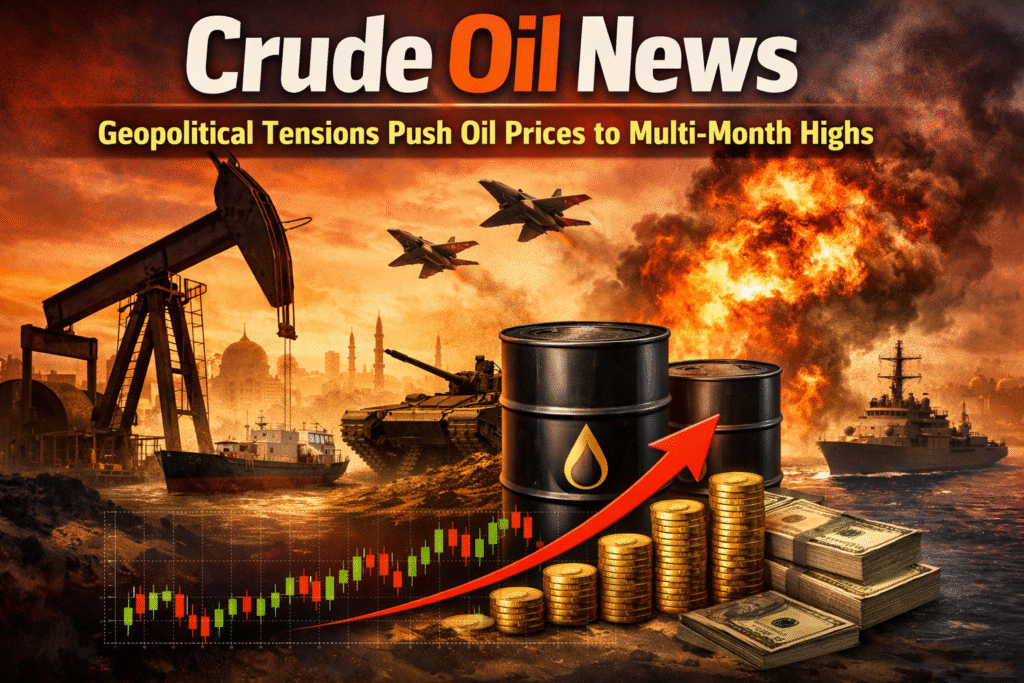
Global crude oil markets are witnessing significant volatility as geopolitical tensions intensify, supply indicators tighten, and investors reassess risk across energy markets. Over the past week, crude oil prices have surged to their highest levels in months, driven largely by escalating tensions between the United States and Iran and concerns over potential supply disruptions that could ripple through global markets.
Crude Oil Prices Surge on Geopolitical Risks
The most striking development in the latest crude oil news is the sharp rise in benchmark oil prices. Brent crude, the global benchmark, recently exceeded $72 per barrel, marking its highest point in nearly six months. At the same time, U.S. West Texas Intermediate (WTI) crude has climbed close to $67 per barrel. This spike reflects investor anxiety about potential conflict in the Middle East, particularly surrounding stalled diplomatic negotiations and escalating military posturing between the U.S. and Iran.
Analysts are attributing much of this rally to what’s called a “geopolitical risk premium” — the added cost that markets factor into prices when there’s even a hint of supply interruption. With Iran stepping up military drills and the U.S. warning Tehran of consequences if negotiations do not progress, traders are pricing in the possibility that oil shipments could be disrupted.
U.S.-Iran Tensions and Market Impacts
A major driver behind the uptick in crude oil prices has been the deteriorating diplomatic climate between Washington and Tehran. Reports indicate that the U.S. has given Iran a firm deadline to comply with certain demands related to its nuclear program, and has not ruled out military action. In response, Iran has signaled its readiness to defend itself vigorously.
One of the most sensitive strategic points linked to the crude oil market is the Strait of Hormuz, a narrow waterway through which a significant portion of the world’s crude supply transits. Any actual closure or disruption in this passage due to conflict could drastically reduce available oil shipments and send prices even higher.
Supply Signals Tighten
Alongside geopolitical factors, market fundamentals are adding pressure on crude oil prices. Recent data from energy agencies show a notable decline in U.S. crude inventories, with stocks dropping by millions of barrels in the latest reporting period. This drawdown suggests stronger demand or slower supply growth, both of which tend to support higher prices.
At the same time, the number of active drilling rigs in the U.S., as measured by Baker Hughes, has remained flat, indicating that production has not expanded significantly in response to rising prices. A steady rig count limits the potential for rapid increases in crude output, helping sustain upward price pressure.
Market Reactions and Price Movements
While most of the current crude oil news highlights rising prices, trading sessions have shown some mixed signals. For example, in recent trading, U.S. crude futures experienced a modest pullback, closing slightly lower in a session where traders weighed conflicting demand and supply signals.
Despite these short-term fluctuations, the broader trend points to a market increasingly sensitive to external risks. Many investors are recalibrating their positions in energy assets to account for higher potential volatility and the possibility that geopolitical tensions could exacerbate supply constraints.
Global Implications of Rising Crude Prices
The rise in crude oil prices reverberates well beyond energy markets. Consumer fuel costs, production costs for industries reliant on petroleum products, and broader inflation trends can all be influenced by climbing crude benchmarks. Nations that import most of their energy — especially developing economies — face the dual challenge of higher import bills and inflationary pressures at home.
In India, for instance, analysts warn that rising crude oil import costs could amplify fuel price inflation, adding pressure on household budgets and broader macroeconomic stability. India is one of the world’s largest importers of crude, and any sustained increase in prices directly impacts fuel pricing in the domestic market.
Expert Views and Outlook
Market analysts emphasize that the future trajectory of crude oil prices hinges on how geopolitical tensions evolve. If negotiations between world powers and Iran de-escalate and diplomatic breakthroughs are achieved, the current risk premium might diminish, leading to softer crude prices. However, any intensification of military posturing — particularly around the Strait of Hormuz — could push prices even higher and trigger broader volatility.
Many energy strategists note that even the perception of conflict can cause traders to price in worst-case supply scenarios well before any tangible disruptions occur. This dynamic highlights the sensitivity of global oil markets to geopolitical headlines and investor sentiment.
The latest crude oil news underscores a market at a crossroads — driven by geopolitical tensions, supply-side dynamics, and heightened risk pricing. With benchmark crude prices nearing multi-month highs and global energy markets on alert, the coming weeks could prove pivotal for the direction of oil markets and broader economic conditions worldwide.