


The Bharatiya Janata Party (BJP) on Tuesday unveiled its fourth list of candidates for the upcoming West Bengal Assembly Elections 2026, further intensifying the political battle in one of India’s most closely watched state elections. With this latest announcement, the party continues to fine-tune its electoral strategy, including a notable last-minute change in one constituency.


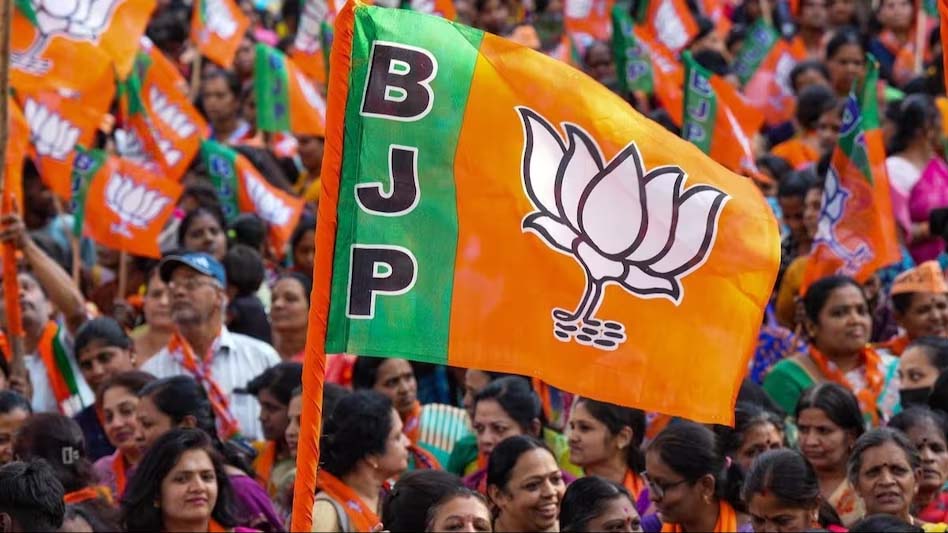
In a key development, Dalim Roy has been named as the new candidate from the Maynaguri (SC) Assembly constituency, replacing Kaushik Roy. The decision signals the party’s intent to recalibrate its approach in select seats where it sees a need to strengthen its position ahead of polling.
Full List of Candidates Announced
The fourth list features 13 candidates across various constituencies. According to the party’s announcement:
- Ashutosh Barma will contest from Sitai (SC)
- Girija Shankar Roy from Natabari
- Soma Thakur from Bagda (SC)
- Uttam Kumar Banik from Magrahat Purba
- Debangshu Panda from Falta
- Debashish Dhar from Sonarpur Uttar
- Santosh Pathak from Chowrangee
- Shyamal Hati from Howrah Dakshin
- Ranjan Kumar Paul from Panchla
- Piyush Kantil Das from Chandipur
- Pradeep Lodha from Garbeta
- Manav Guha from Memari
- Arijit Roy from Barabani
These selections reflect a mix of experienced leaders and fresh faces, indicating BJP’s attempt to balance organizational strength with local appeal.
BJP Nears Full Candidate Coverage
With the release of this fourth list, BJP has now announced a total of 287 candidates for the 2026 Assembly elections. The breakdown shows a phased and strategic rollout:
- First list: 144 candidates
- Second list: 111 candidates
- Third list: 19 candidates
- Fourth list: 13 candidates
This near-complete coverage demonstrates the party’s preparedness and its aggressive push to expand its footprint in West Bengal, where it has been striving to challenge the ruling establishment.
Election Schedule and Key Dates
As per the Election Commission of India, the West Bengal Assembly elections will be conducted in two phases:
- Phase 1: April 23, 2026
- Phase 2: April 29, 2026
The counting of votes for both phases is scheduled for May 4, 2026, when the final results will determine the political future of the state.
For the first phase:
- Last date for filing nominations: April 6
- Scrutiny of nominations: April 7
- Last date for withdrawal: April 9
For the second phase:
- Gazette notification: April 2
- Last date for filing nominations: April 9
- Scrutiny: April 10
- Withdrawal deadline: April 13
Strategic Importance of Candidate Changes
The replacement of a candidate in Maynaguri (SC) is being seen as a tactical move by BJP. Candidate selection plays a crucial role in West Bengal politics, where local dynamics, caste equations, and grassroots connect often determine electoral outcomes.
By introducing Dalim Roy in place of Kaushik Roy, BJP appears to be addressing constituency-specific challenges and attempting to maximize its chances in a competitive seat.
Political Context and Competition
The 2026 West Bengal Assembly elections are expected to witness a fierce contest among major political players, including the ruling Trinamool Congress, BJP, and other regional forces. BJP, which emerged as a strong विपक्ष (opposition) force in previous elections, is aiming to further consolidate its voter base across rural and urban constituencies.
The party’s candidate lists so far suggest a focused approach, with attention to social representation, regional balance, and electoral viability.
What Lies Ahead
With most candidates now, the focus will shift to campaigning, alliances, and voter outreach. Political rallies, manifesto releases, and grassroots mobilization are expected to intensify in the coming days as parties race against time to secure voter support.
For BJP, the challenge will be to convert its organizational strength and candidate selection into electoral success. The coming weeks will be crucial in determining how effectively the party can connect with voters on key issues such as development, governance, and regional identity.
As West Bengal gears up for polling, all eyes will be on how these candidate choices shape the electoral narrative in one of India’s most politically significant states.