


India’s fertiliser imports from China have surged sharply in the current financial year, with urea imports touching a three-year high. Government data presented in Parliament shows that the country has significantly increased fertiliser purchases from both China and Russia to ensure adequate supply for its large agricultural sector.

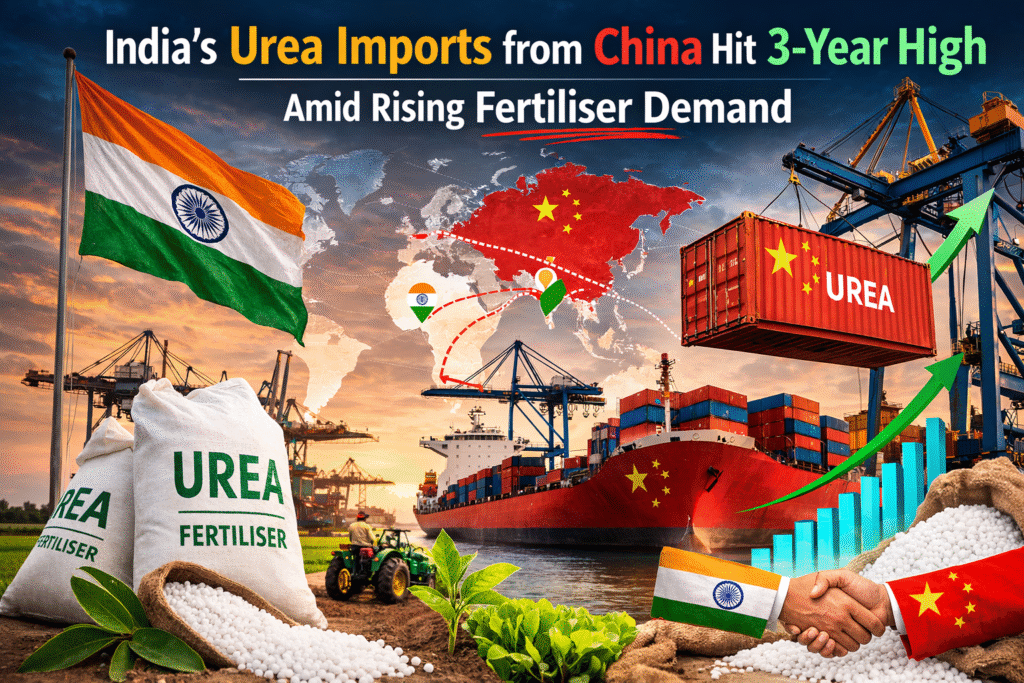

According to the data shared in a written reply to the Lok Sabha by Minister of State for Fertilisers Anupriya Patel, India imported 21.24 lakh tonnes of urea from China between April 2025 and February 2026. This marks the highest level of imports from China in the past three years and reflects the growing demand for fertilisers in the country.
The latest import figure is significantly higher than the 0.99 lakh tonne of urea imported from China during the entire financial year 2024-25. It also surpasses previous years, including 18.65 lakh tonnes in 2023-24 and 12.80 lakh tonnes in 2022-23. The sharp rise highlights India’s continued reliance on imports to meet domestic fertiliser demand, particularly during peak agricultural seasons.
India’s Urea Imports Fertiliser Imports from China Expand Beyond Urea
Apart from urea, India has also imported other fertilisers from China in considerable quantities during the current fiscal year. Government data indicates that between April 2025 and February 2026, India imported:
-
5.11 lakh tonnes of Di-Ammonium Phosphate (DAP)
-
0.28 lakh tonnes of Muriate of Potash (MoP)
-
9.61 lakh tonnes of NPK fertilisers
These imports collectively brought India’s total phosphatic and potassic fertiliser imports from China to around 15 lakh tonnes during the period.
Phosphatic and potassic fertilisers play a crucial role in improving soil fertility and boosting crop productivity. With India being one of the world’s largest agricultural producers, ensuring steady fertiliser supplies remains a key priority for the government.
Russia Emerges as Another Major Supplier
While China remains a major fertiliser supplier, Russia has also emerged as a key source for India’s fertiliser imports this year. Data presented in Parliament shows that India imported 13.99 lakh tonnes of urea from Russia up to February 2026, already surpassing the 9.23 lakh tonnes imported during the entire financial year 2024-25.
In addition to urea, fertiliser imports from Russia include:
-
7.55 lakh tonnes of DAP
-
12.97 lakh tonnes of MoP
-
21 lakh tonnes of NPK fertilisers
These figures underline Russia’s growing role in supporting India’s fertiliser supply chain, particularly at a time when global fertiliser markets have been experiencing price fluctuations and supply uncertainties.
Combined Urea Imports from China and Russia
Together, China and Russia supplied approximately 35.23 lakh tonnes of urea to India by February in the current financial year. These imports form a significant portion of India’s fertiliser procurement strategy, helping the country meet agricultural requirements across different states.
India also continues to import urea from several other countries. According to government data, total urea imports from other nations reached 56.47 lakh tonnes during the financial year 2024-25.
Domestic Availability Remains Comfortable
Despite the surge in imports, the government has assured that fertiliser availability within the country remains comfortable. Minister Anupriya Patel informed Parliament that around 432.44 lakh tonnes of urea are currently available in India, compared with a total estimated requirement of 370.84 lakh tonnes.
This surplus availability is intended to ensure farmers receive timely fertiliser supplies during sowing seasons without facing shortages.
Direct Benefit Transfer Ensures Efficient Distribution
The government has also been strengthening the distribution system for fertilisers through the Direct Benefit Transfer (DBT) mechanism. Under this system, fertilisers are sold to farmers at subsidised rates while ensuring better transparency and tracking of supplies.
So far this financial year, 381.59 lakh tonnes of urea have been sold through the DBT system, reflecting the scale of fertiliser consumption across the country.
Open Import Policy for Phosphatic and Potassic Fertilisers
Unlike urea, which is heavily regulated, phosphatic and potassic fertilisers are covered under the Open General Licence (OGL) system. This allows fertiliser companies to import or manufacture these products based on their own commercial decisions and market demand.
The policy provides flexibility for private companies and helps maintain stable supplies of essential fertilisers required for India’s diverse cropping patterns.
Rising Demand from Agriculture
India’s increasing fertiliser imports are largely driven by the country’s expanding agricultural needs. With millions of farmers depending on fertilisers to improve crop yields, ensuring adequate supply remains a critical component of India’s food security strategy.
As the current fiscal year progresses, the government is expected to continue monitoring fertiliser availability, import trends, and domestic production to ensure farmers have uninterrupted access to essential agricultural inputs.