
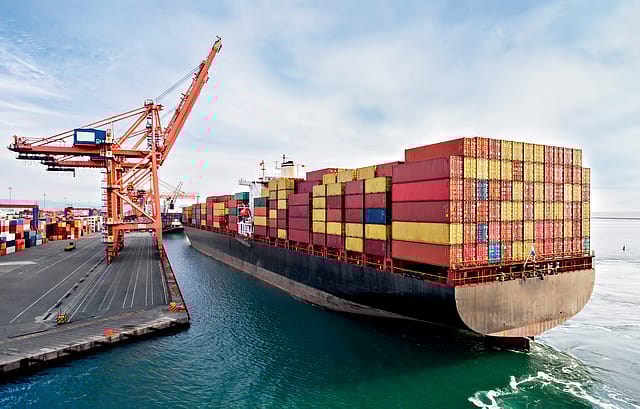
Growing tensions in the Middle East and the possibility of disruptions in the Strait of Hormuz have brought renewed attention to Iran’s fragile economy and its dependence on Asian markets—particularly China. As geopolitical pressure increases due to military confrontations and sanctions, Iran’s economic survival increasingly depends on maintaining stable export routes and strong trade relations with a small number of key partners.
Recent developments have raised concerns among analysts that any prolonged disruption to maritime trade in the Strait of Hormuz could have serious consequences not only for global energy markets but also for Iran itself. Although Iran has often threatened to restrict traffic through the strategic waterway in response to pressure from the United States and Israel, many experts believe that a long-term blockade would be economically damaging for Tehran.
The Strategic Importance of the Strait of Hormuz
The Strait of Hormuz is one of the most critical maritime chokepoints in the world. Located between Iran and Oman, the narrow passage connects the Persian Gulf to the Arabian Sea and serves as a key route for global energy trade. Approximately 20 percent of the world’s crude oil consumption is transported through this corridor every day.
In addition to crude oil, the strait is also used for transporting liquefied natural gas (LNG), aviation fuel, and other energy products. A large share of these shipments is destined for Asian markets, especially China, India, Japan, and South Korea.
Because of its central role in global energy supply, any disruption in the Strait of Hormuz has immediate consequences for international markets. Oil prices often surge when tensions in the region escalate, as traders fear supply shortages or transportation risks.
Rising Oil Prices Amid Regional Conflict
Energy markets have already begun reacting to the latest developments in the Middle East. Since the recent military escalation involving the United States, Israel, and Iran, oil and gas prices have increased sharply.
Analysts warn that if maritime traffic through the Strait of Hormuz becomes unsafe or severely restricted, global oil prices could climb to around $100 per barrel or even higher. Such a scenario would affect fuel costs worldwide and create inflationary pressure on many economies.
However, while a blockade might initially disrupt exports from rival Gulf states, it could also severely harm Iran’s own economic interests.
Iran’s Economy Depends on Maritime Trade
Despite its political rhetoric, Iran’s economy is heavily dependent on maritime trade routes that pass through or near the Strait of Hormuz. A large portion of the country’s imports and exports rely on ports that use this passage for international shipping.
Economic analysts estimate that roughly 70 percent of Iran’s non-oil trade moves through ports connected to the strait. These ports handle everything from consumer goods and food supplies to industrial equipment and raw materials.
If shipping routes were blocked for a long period, Iran would face serious shortages of essential goods. The country relies on imports for many critical products, including certain types of food, machinery, and industrial components. Disrupting these supply lines could quickly create economic and social challenges.
For this reason, many experts believe that Iran is unlikely to pursue a full closure of the Strait of Hormuz unless the situation becomes extremely severe.
China: Iran’s Most Important Trading Partner
One of the most important factors shaping Iran’s economic strategy is its relationship with China. Due to decades of Western sanctions, Iran has increasingly shifted its trade toward Asian economies.
China has emerged as Iran’s largest buyer of oil and one of its most important economic partners. Chinese companies and traders purchase large volumes of Iranian crude, often at discounted prices compared with global market rates.
For Iran, this relationship provides a crucial source of revenue at a time when sanctions have limited its access to traditional Western markets. Without Chinese demand, Iran would struggle to sell a significant portion of its oil production.
In addition to oil, China imports other Iranian goods such as petrochemical products, minerals, and industrial materials. Meanwhile, Iran imports machinery, electronics, and consumer goods from China.
This mutually beneficial trade relationship has helped Iran maintain a degree of economic stability despite ongoing sanctions.
Impact of Western Sanctions on Iran
Iran’s economic dependence on China did not develop overnight. It is largely the result of decades of international sanctions imposed by Western countries.
Following the Islamic Revolution in 1979, the United States and several allies introduced sanctions targeting Iran’s financial system, energy exports, and military industries. These measures were intensified in later years due to concerns about Iran’s nuclear program.
Between 2006 and 2015, the United Nations also imposed a series of sanctions aimed at limiting Iran’s nuclear activities. Although some restrictions were eased after the 2015 nuclear agreement, many sanctions returned after the United States withdrew from the deal in 2018.
These sanctions have significantly limited Iran’s access to international banking systems, foreign investment, and modern technology.
Long-Term Economic Consequences
The restrictions have had long-lasting effects on Iran’s energy sector. Oil production capacity has gradually declined because sanctions prevent the country from obtaining advanced extraction technologies and attracting large-scale foreign investment.
As a result, Iran often sells its oil at lower prices to attract buyers willing to navigate sanctions risks. This strategy helps maintain export volumes but reduces the revenue earned per barrel.
Experts say this has created a structural weakness in Iran’s economy. While the country continues to participate in global oil markets, it does so as a discounted supplier with limited bargaining power.
Over time, this dynamic could gradually weaken the overall performance of Iran’s economy.
Why a Strait of Hormuz Blockade Is Unlikely
Given these economic realities, analysts believe Iran will be cautious about taking actions that could harm its own export routes.
Blocking the Strait of Hormuz would disrupt shipments not only from rival Gulf producers but also from Iran itself. Such a move could interrupt oil deliveries to China and India—two of the few major markets still purchasing Iranian crude.
It would also affect the arrival of imported goods that Iran relies on for domestic consumption and industrial production.
Because of these risks, most experts believe Iran will continue to use the threat of a blockade primarily as a political and strategic warning rather than an actual long-term policy.
Gold Rate Today in India Hits Record february Global Uncertainty
Global Implications
Even the possibility of disruption in the Strait of Hormuz is enough to influence global energy markets. Governments around the world closely monitor developments in the region because a major crisis could affect fuel supplies, transportation costs, and economic stability.
Many countries, including the United States, members of the European Union, Japan, and Canada, maintain strategic petroleum reserves to cushion temporary supply shocks. These reserves can provide emergency fuel supplies during short-term disruptions.
However, a prolonged conflict affecting the strait would still have significant global consequences.
Conclusion
Iran’s reliance on China for exports reflects the broader transformation of its economy under decades of sanctions and geopolitical pressure. As Western markets became largely inaccessible, Iran increasingly turned toward Asian partners—especially China—to sustain its oil industry and generate foreign revenue.
At the same time, the country remains deeply dependent on maritime trade routes such as the Strait of Hormuz for both exports and essential imports.
This economic reality explains why many analysts believe Iran will avoid a prolonged blockade of the strait despite rising tensions in the region. While threats to disrupt shipping may serve as a strategic tool in geopolitical disputes, the costs of such an action could ultimately fall heavily on Iran itself.
As global attention remains focused on the Middle East, the delicate balance between political confrontation and economic necessity continues to shape Iran’s decisions and its relationships with major trading partners like China.