
As geopolitical tensions continue to reshape global security dynamics—particularly amid the ongoing situation involving Iran—India defense industry is witnessing an unprecedented boom. Reports of increased demand for advanced weapon systems such as rocket launchers and missile platforms have sparked discussions about who is purchasing these systems and what it signals for India’s emergence as a global defense exporter.
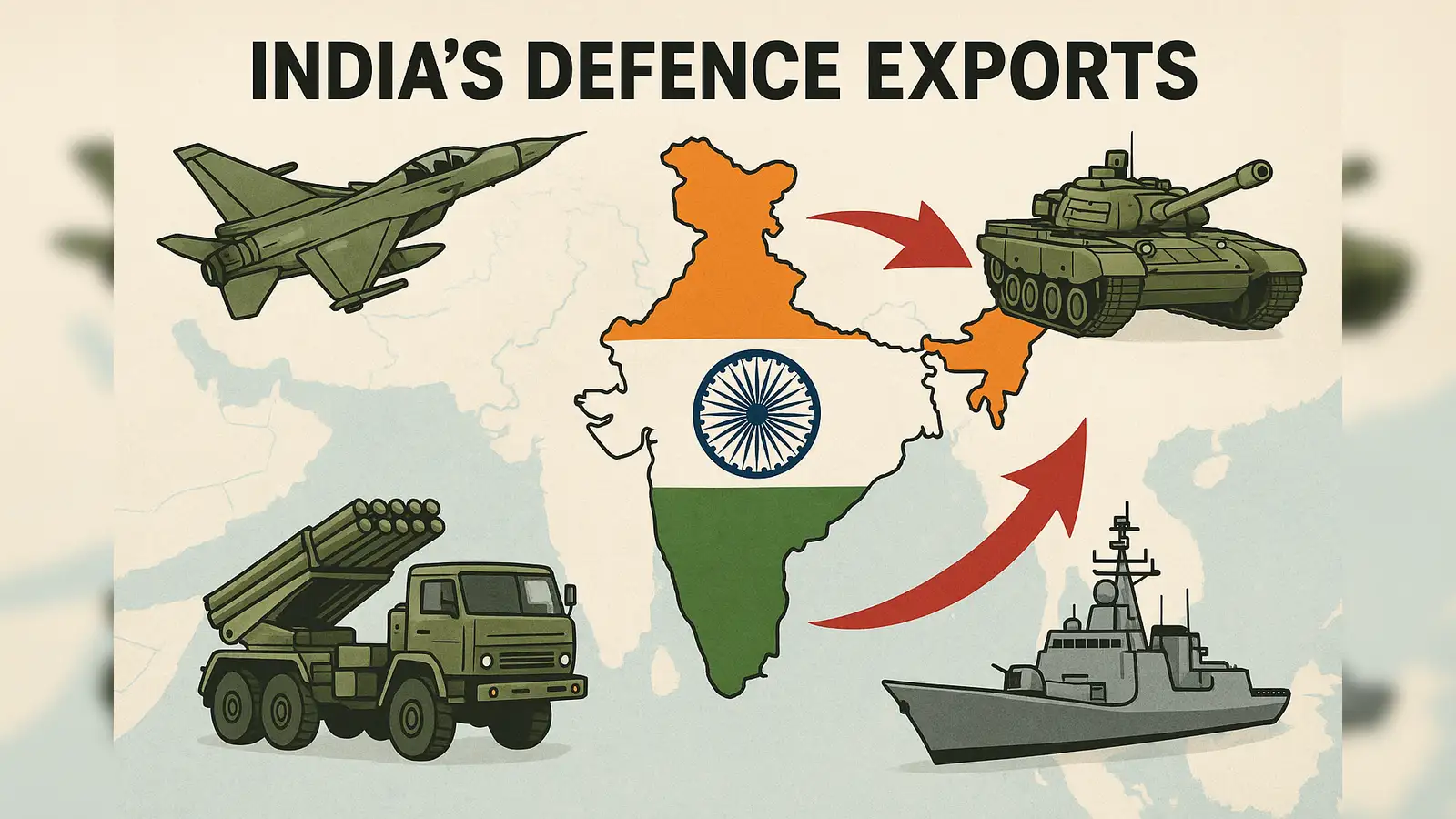
India Defense Exports Surge
Over the past decade, India has steadily transformed from a largely import-dependent military market into a growing exporter of sophisticated defense equipment. This shift is now clearly reflected in the country’s export figures. In the financial year 2025–26, India’s defense exports reached an all-time high of ₹38,424 crore, a dramatic rise compared to just ₹1,522 crore in 2016–17. This exponential growth highlights not only improved manufacturing capabilities but also increasing global trust in Indian defense technology.
The upward trend in exports has been consistent, with only minor disruptions. India first crossed the ₹10,000 crore mark in 2018–19, marking a key milestone in its defense export journey. Although the COVID-19 pandemic temporarily slowed momentum, the sector rebounded strongly post-2021. Between 2023–24 and 2025–26, exports surged from ₹21,083 crore to ₹38,424 crore, demonstrating accelerating demand in a world facing rising security challenges.
A major reason behind this growth is the diversification of India’s defense portfolio. The country is no longer limited to exporting spare parts or basic equipment. Instead, it now offers a wide range of advanced systems that meet international standards. These include the HAL Tejas fighter jet, the BrahMos missile, and the Pinaka rocket launcher. Additionally, India exports radar systems, armored vehicles, anti-drone technologies, and advanced helicopters like the HAL Dhruv and HAL Prachand. Air defense systems such as the Akash missile system have also attracted considerable global attention.
India’s defense exports now reach over 100 countries, showcasing its expanding global footprint. The United States has emerged as a major buyer, primarily importing aircraft components and subsystems. Other significant partners include France, Armenia, Philippines, Germany, Israel, Indonesia, and Egypt. These nations are investing in Indian systems for their cost-effectiveness, reliability, and growing technological sophistication.
also see: MARKET NEWS
The reported increase in demand for rocket launchers and missile systems amid tensions involving Iran reflects a broader global trend: nations are rapidly strengthening their defense capabilities in response to evolving threats. However, it is important to note that defense exports are governed by strict regulations and international agreements. India follows a controlled and transparent export policy to ensure that its equipment is supplied responsibly and does not contribute to destabilizing conflicts.
From an economic perspective, the defense export boom is a significant achievement. It supports domestic manufacturing under initiatives like “Make in India,” creates employment, and reduces reliance on imports. Strategically, it enhances India’s position as a reliable defense partner on the global stage.
In conclusion, the surge in India’s defense exports is not just a response to current conflicts but a reflection of long-term strategic planning, technological advancement, and global demand. As international security concerns continue to evolve, India is positioning itself as a key player in the global defense market—balancing economic growth with responsible defense diplomacy.
- Gold and Silver Crash from Highs — Gold Drops ₹53,000, Silver Still ₹2.06 Lakh Below Peak
- India’s Pharma Export Nears $29 Billion Mark, Shows Strong Growth Momentum